OCI E6 vs E5 vs E4 Compute Flex Shapes

OCI E6 vs E5 vs E4: Compute Flex Shapes

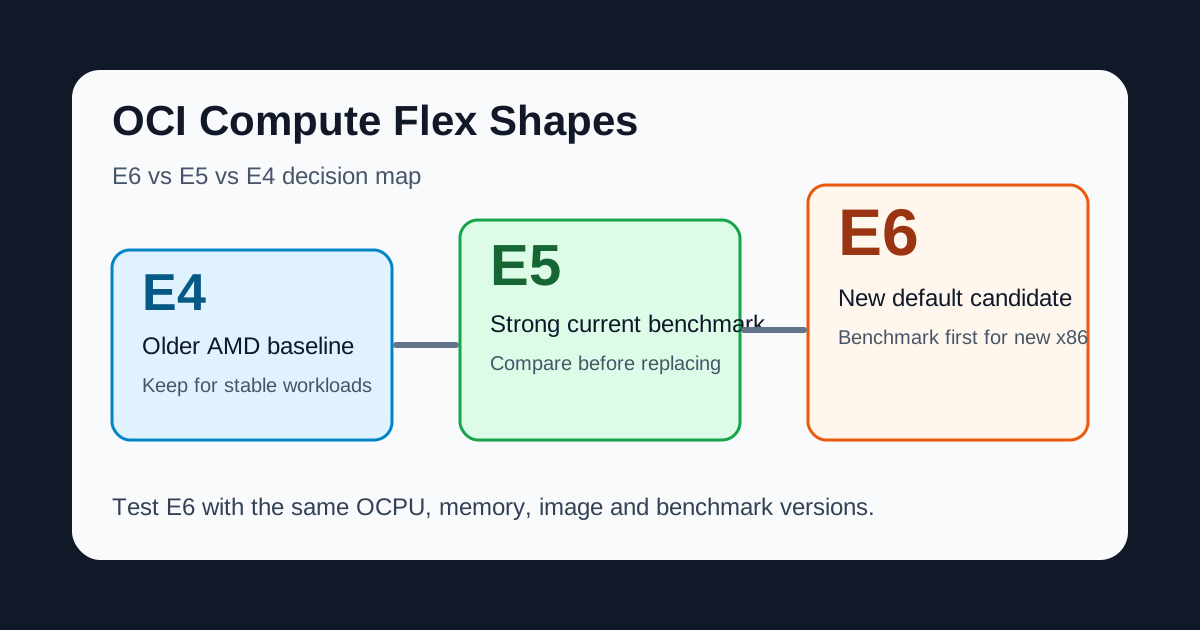
In brief OCI E6 Standard Compute is the next AMD x86 generation to evaluate when you are choosing between VM.Standard.E6.Flex, VM.Standard.E5.Flex, and VM.Standard.E4.Flex. If you are starting a new OCI workload today, E6 should be on the shortlist before E5 or E4. The reason is simple: Oracle positions E6 as a newer 5th Gen AMD EPYC-based generation with better performance at the same price point as E5 in its launch messaging. That does not make old benchmarks useless, but it changes the next decision: every existing E5/E4 benchmark should now have an E6 follow-up. ...

June 3, 2026 · 5 min · Enrico Pesce
OCI Flex Shapes Benchmark

OCI Flex Shapes: E5 vs E4 vs A1

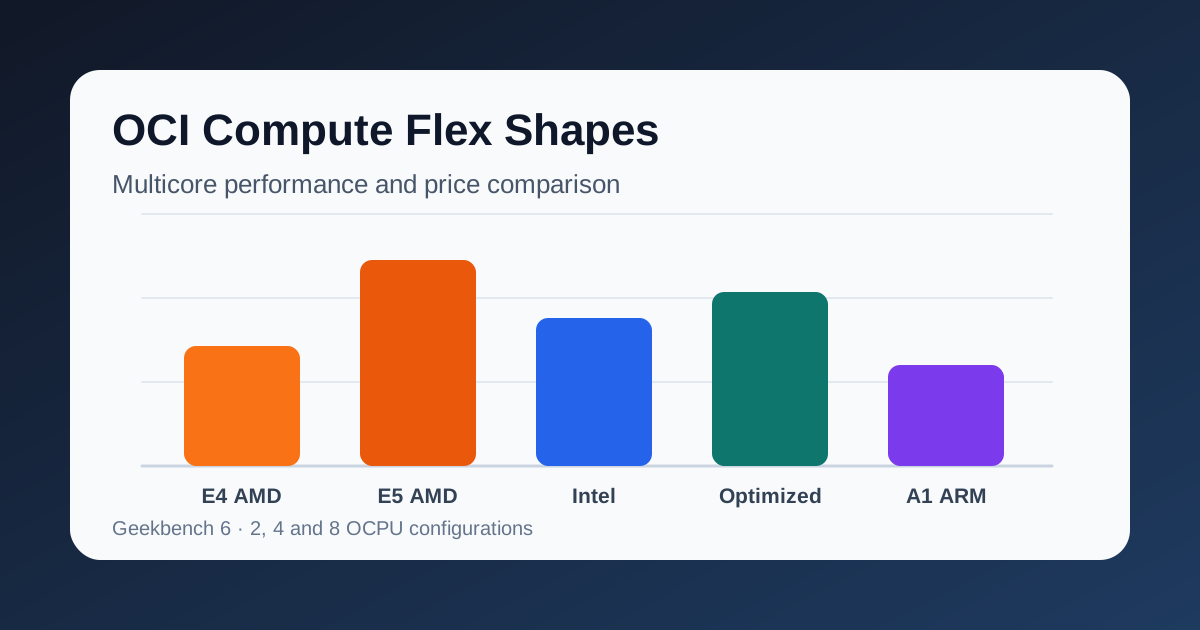
If you are comparing OCI Compute Flex shapes, the short answer from this Geekbench 6 run is: VM.Standard.E5.Flex led in raw multicore performance, VM.Standard.A1.Flex was the strongest cost-conscious option, and the Intel-based shapes remained relevant when x86 compatibility is a hard requirement. Quick recommendation Goal Start with Why Best multicore performance VM.Standard.E5.Flex Highest Geekbench 6 multicore score in this test. Lowest cost with strong throughput VM.Standard.A1.Flex Similar score to E4/Optimized3 in this benchmark, with the lowest price in the table. Existing x86 workload compatibility VM.Standard3.Flex or VM.Optimized3.Flex Useful when your software stack is tied to x86 packages, binaries, or vendor support. Balanced AMD x86 option VM.Standard.E4.Flex Lower-cost x86 option, but behind E5 in this benchmark. This is a benchmark snapshot from March 2024. Use the numbers below to compare relative behavior, then verify current regional availability and pricing in the OCI Cost Estimator before making a production decision. ...

March 19, 2024 · 5 min · Enrico Pesce

OCI Compute Standard Flex Shapes: Another CPU Multicore Benchmark

When selecting a compute instance, factors such as raw computational power, price-to-performance ratio, and workload optimization play a significant role. Let’s focus on the following standard flex shapes available in most OCI regions: VM.Standard.E4.Flex (Processor: AMD EPYC 7J13. Base frequency 2.55 GHz, max boost frequency 3.5 GHz) VM.Standard.E5.Flex (Processor: AMD EPYC 9J14. Base frequency 2.4 GHz, max boost frequency 3.7 GHz) VM.Standard3.Flex (Processor: Intel Xeon Platinum 8358. Base frequency 2.6 GHz, max turbo frequency 3.4 GHz) VM.Optimized3.Flex (Processor: Intel Xeon 6354. Base frequency 3.0 GHz, max turbo frequency 3.6 GHz) VM.Standard.A1.Flex (Each OCPU corresponds to a single hardware execution thread. Processor: Ampere Altra Q80-30. Max frequency 3.0 GHz.) I conducted benchmark tests with Geekbench 6 on three CPU configurations: 2, 4, and 8 cores. ...

February 10, 2024 · 2 min · Enrico Pesce
Performance testing with PHP and OCI Compute instances

Performance testing with PHP and OCI Compute instances

A while ago, I developed a tool with the aim of assessing the actual performance improvement between different versions of PHP. Subsequently, I search to understand which AWS instance type was the most performant. Since AWS does not allow for custom sizing of CPU and RAM resources, I wanted to explore the differences among the various instance types and determine which one would be most cost-effective to choose. During the holiday season, I dedicated myself to expanding this project and doing the same analysis with OCI , Oracle Cloud Infrastructure. ...