OCI Flex Shapes Benchmark

OCI Flex Shapes: E5 vs E4 vs A1

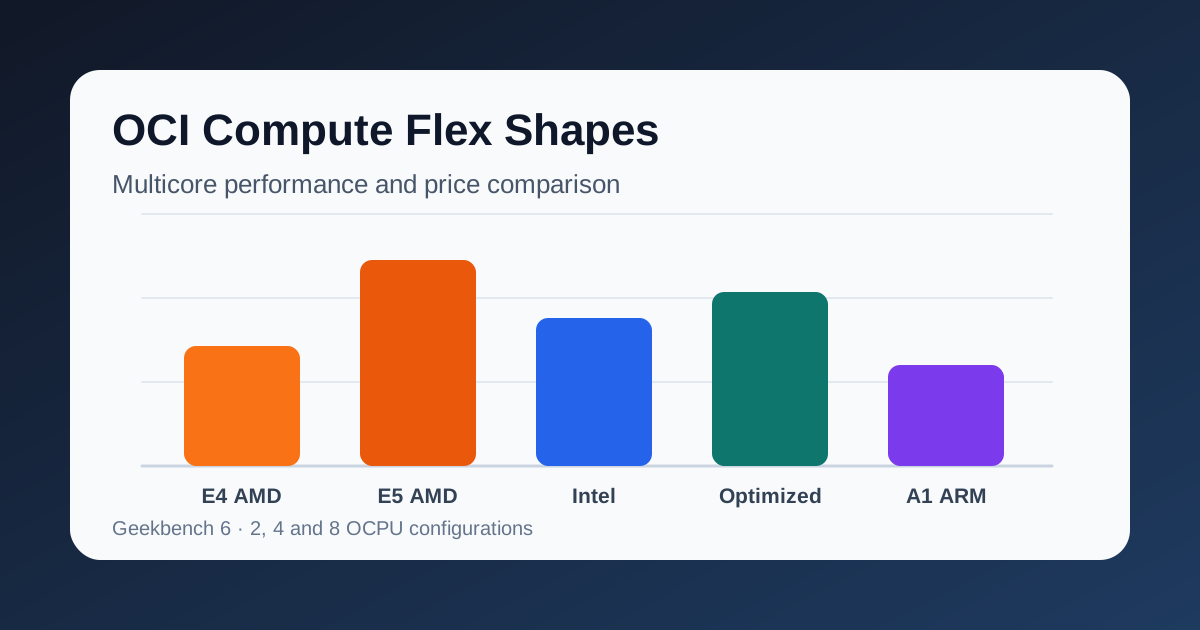
If you are comparing OCI Compute Flex shapes, the short answer from this Geekbench 6 run is: VM.Standard.E5.Flex led in raw multicore performance, VM.Standard.A1.Flex was the strongest cost-conscious option, and the Intel-based shapes remained relevant when x86 compatibility is a hard requirement. Quick recommendation Goal Start with Why Best multicore performance VM.Standard.E5.Flex Highest Geekbench 6 multicore score in this test. Lowest cost with strong throughput VM.Standard.A1.Flex Similar score to E4/Optimized3 in this benchmark, with the lowest price in the table. Existing x86 workload compatibility VM.Standard3.Flex or VM.Optimized3.Flex Useful when your software stack is tied to x86 packages, binaries, or vendor support. Balanced AMD x86 option VM.Standard.E4.Flex Lower-cost x86 option, but behind E5 in this benchmark. This is a benchmark snapshot from March 2024. Use the numbers below to compare relative behavior, then verify current regional availability and pricing in the OCI Cost Estimator before making a production decision. ...

March 19, 2024 · 5 min · Enrico Pesce

OCI Compute Standard Flex Shapes: Another CPU Multicore Benchmark

When selecting a compute instance, factors such as raw computational power, price-to-performance ratio, and workload optimization play a significant role. Let’s focus on the following standard flex shapes available in most OCI regions: VM.Standard.E4.Flex (Processor: AMD EPYC 7J13. Base frequency 2.55 GHz, max boost frequency 3.5 GHz) VM.Standard.E5.Flex (Processor: AMD EPYC 9J14. Base frequency 2.4 GHz, max boost frequency 3.7 GHz) VM.Standard3.Flex (Processor: Intel Xeon Platinum 8358. Base frequency 2.6 GHz, max turbo frequency 3.4 GHz) VM.Optimized3.Flex (Processor: Intel Xeon 6354. Base frequency 3.0 GHz, max turbo frequency 3.6 GHz) VM.Standard.A1.Flex (Each OCPU corresponds to a single hardware execution thread. Processor: Ampere Altra Q80-30. Max frequency 3.0 GHz.) I conducted benchmark tests with Geekbench 6 on three CPU configurations: 2, 4, and 8 cores. ...

February 10, 2024 · 2 min · Enrico Pesce
Kopia OCI Backup S3 Setup

Kopia OCI Backup: S3 Setup Guide

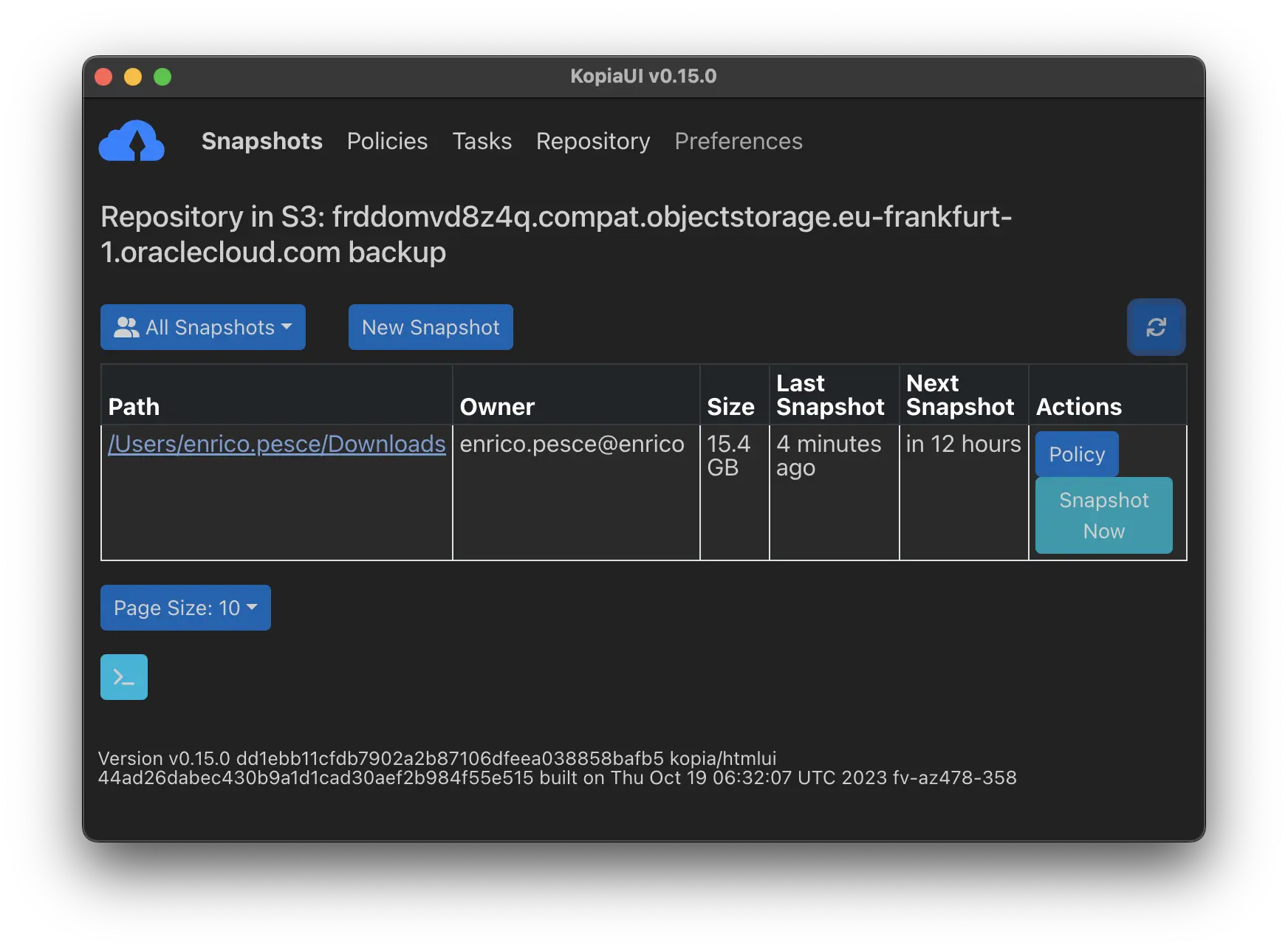
Kopia can use OCI Object Storage as an S3-compatible backend for encrypted, deduplicated and compressed backups. The practical goal of this guide is simple: create a Kopia repository on OCI, validate it, run the first snapshot, and know how to reconnect or restore data later. Quick setup Step What you need 1. Create an OCI bucket Bucket name, namespace and region. 2. Enable S3-compatible access Customer access key and secret key for the OCI user. 3. Create the Kopia repository kopia repository create s3 with the OCI S3 endpoint. 4. Validate the repository kopia repository validate-provider. 5. Create snapshots kopia snapshot create <path>. Why Kopia and OCI Object Storage OCI Object Storage is useful for a Kopia backup repository because it provides: ...

February 6, 2024 · 5 min · Enrico Pesce
Performance testing with PHP and OCI Compute instances

Performance testing with PHP and OCI Compute instances

A while ago, I developed a tool with the aim of assessing the actual performance improvement between different versions of PHP. Subsequently, I search to understand which AWS instance type was the most performant. Since AWS does not allow for custom sizing of CPU and RAM resources, I wanted to explore the differences among the various instance types and determine which one would be most cost-effective to choose. During the holiday season, I dedicated myself to expanding this project and doing the same analysis with OCI , Oracle Cloud Infrastructure. ...

January 19, 2024 · 4 min · Enrico Pesce
Scalable and Serverless Data Ingestion with OCI Functions

Scalable and Serverless Data Ingestion with OCI Functions

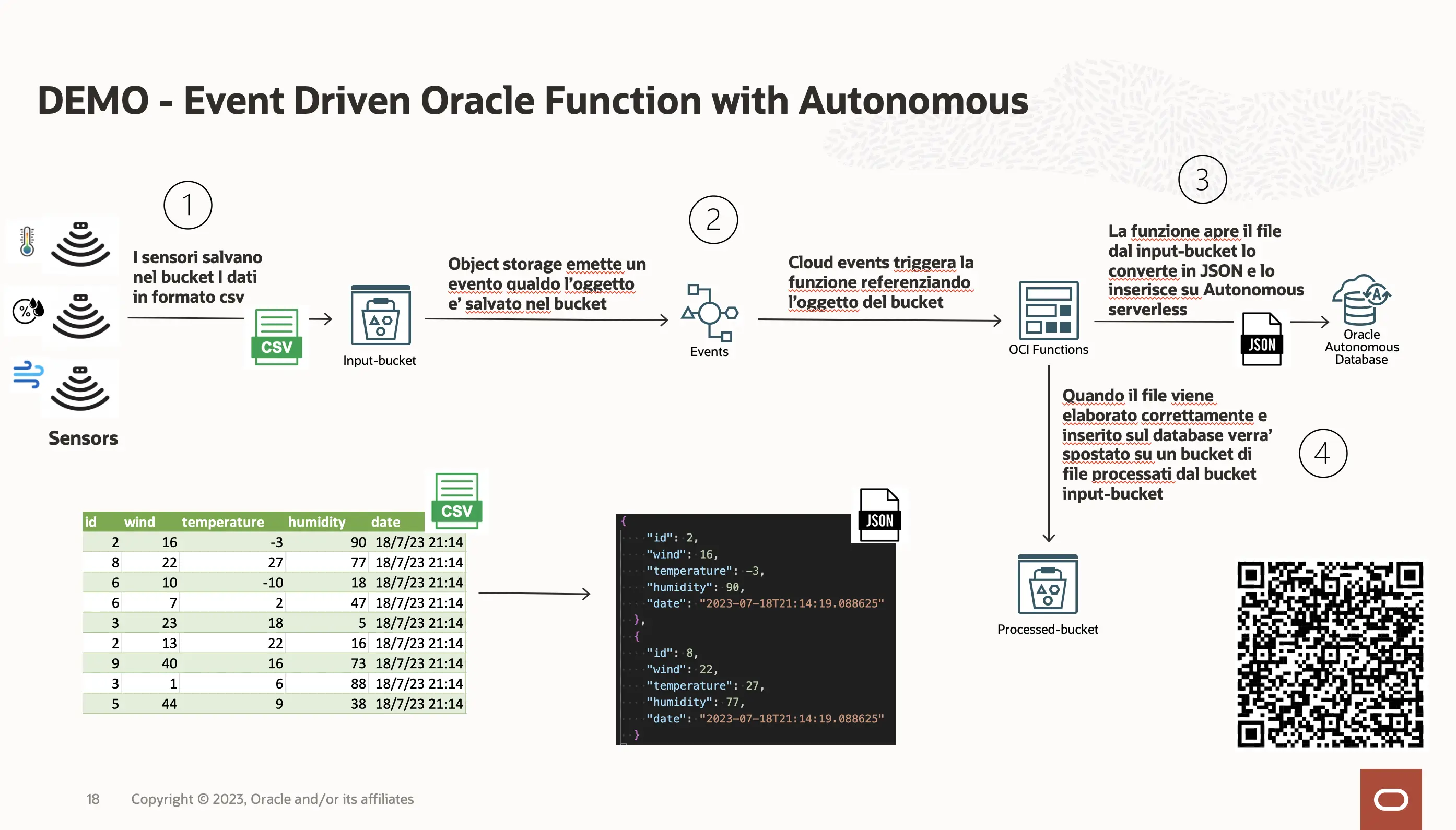
In this article, we will leverage OCI’s capabilities to the fullest, embracing the following principles: Scalability Resilience Flexibility Security Automation The “loadfileintoadw” project is located in the same GitHub repository used so far to discuss OCI Function fn-examples . This example will help you understand how to integrate multiple OCI services and make the most of the cloud provider. We will simulate a series of weather stations that will write a CSV file with sampling data (temperature, humidity, etc.). The sensor will automatically upload the file to an Object Storage bucket. ...

October 20, 2023 · 1 min · Enrico Pesce
Oracle Autonomous Database

Oracle Autonomous Database

Introduction to the most modern cloud database in the market Oracle Autonomous Database is a cloud database that uses machine learning techniques to automate its tuning, security, backup, updates, and other management procedures traditionally carried out by a DBA. Unlike a conventional database, Autonomous performs all these and other activities without the need for human intervention. Why use Autonomous? Databases contain critical business data and are essential for the efficient operation of modern organizations. DBAs are often busy with repetitive and manual database management and maintenance activities. As administration activities increase, the risk of human error becomes higher with catastrophic consequences. ...

September 21, 2023 · 3 min · Enrico Pesce
Accessing an Autonomous Database from an OCI Function

Accessing an Autonomous Database from an OCI Function

After seeing how to create a custom image, in the previous case where we installed the Oracle client, now let’s try to use this custom image to connect to an Oracle database. We will make the most of the cloud capabilities. In this example, we will use the Infrastructure as Code (IaC) methodology to provide a real example of an easily replicable architecture for everyone. The “toautonomous” project is in the same GitHub repository used so far to talk about OCI Function fn-examples . The project’s README describes the infrastructure configuration procedure. ...

September 1, 2023 · 2 min · Enrico Pesce
OCI Function with a custom image

OCI Function with a custom image

As we have seen from my other articles, it is possible to use the FN project with different programming languages using predefined container images, the officially supported languages are: go java Node.js ruby Python C# you can do it with the runtime directive, for example: fn init --runtime python test the command will produce a func.yaml file of this type 1 2 3 4 5 6 7 8 schema_version: 20180708 name: hello version: 0.0.1 runtime: python build_image: fnproject/python:3.9-dev run_image: fnproject/python:3.9 entrypoint: /python/bin/fdk /function/func.py handler memory: 256 However, in some cases, the predefined images are not sufficient, either for extra language support, extra drivers, or other missing tools. ...

May 12, 2023 · 2 min · Enrico Pesce
Trigger a function by Object Storage

Trigger a function by Object Storage

The OCI Function service allows you to run code on infrastructure that you don’t have to manage. In this link I presented a basic example of an OCI function developed in Python. A very interesting feature is that functions can be automatically invoked by other services through an event, so we can also execute code in response to an action in the OCI cloud, or use a function as a link between multiple cloud services that can form a complex workload. ...

April 20, 2023 · 2 min · Enrico Pesce
OCI Functions a Python example

OCI Functions a Python example

The OCI Function service allows you to run code on an infrastructure that you don’t have to manage, in a scalable and automated way. This concept is called “serverless” because the end user will no longer have to worry about managing any infrastructure to run his own code. OCI implements what is the FN open source project, the project has been integrated with Oracle cloud services and is based on the execution of code inside a container, therefore it can potentially support any programming language and any type of container on x86 architecture, moreover, it is not strictly linked with the Oracle infrastructure and you can easily switch between different FN environments. ...

March 20, 2023 · 4 min · Enrico Pesce