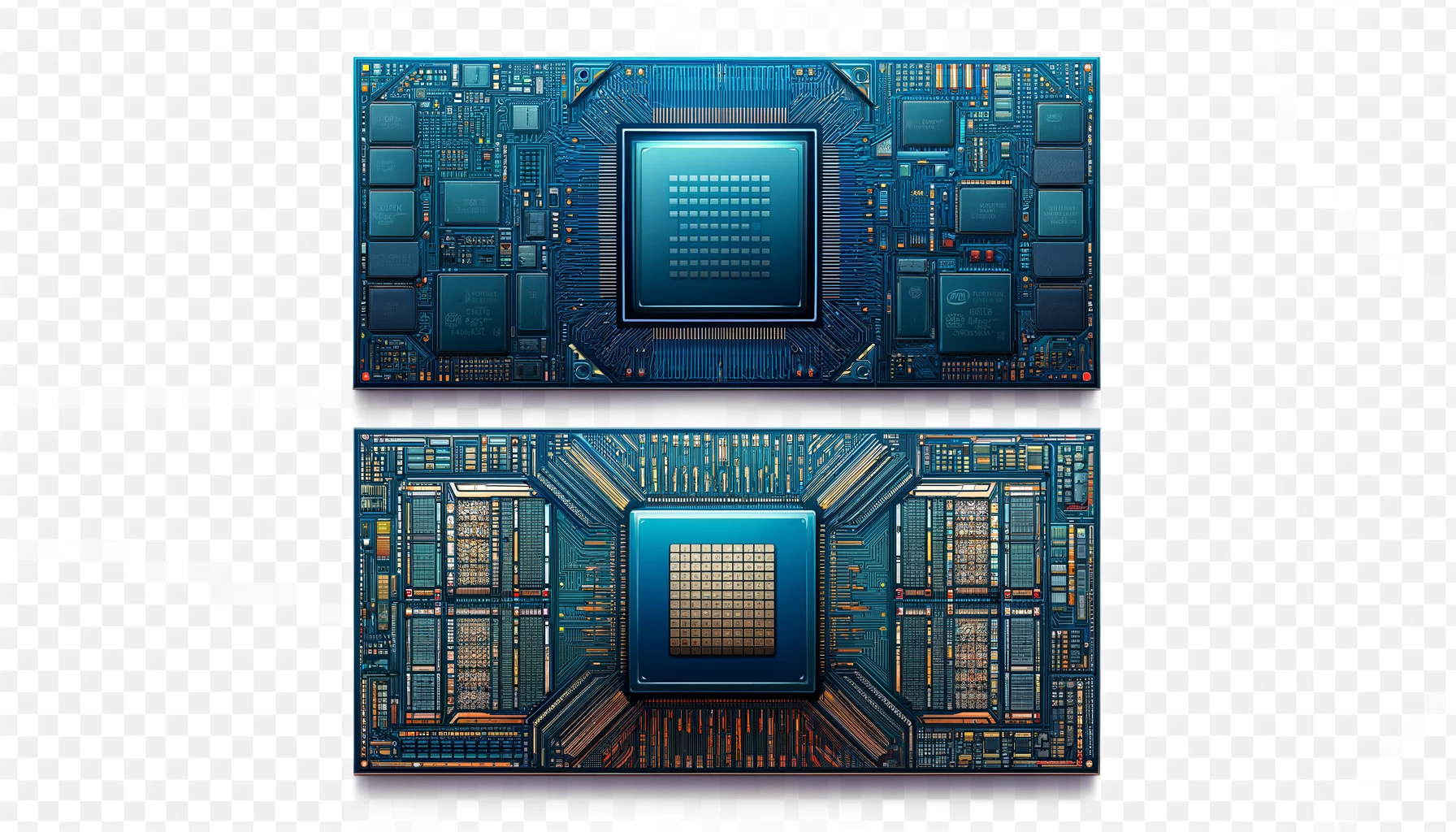
Intel x86 vs. ARM Architecture: A Comparative Analysis for Server Technologies
In the dynamic field of server technology, the battle between CPU architectures has become a focal point, especially between Intel’s x86 architecture and ARM-based processors. This blog post provides a comprehensive comparison of these two architectures, focusing specifically on their performance metrics, energy efficiency, and their overarching impact on the server and cloud computing sectors.
Detailed Architectural Insights
Intel x86 Architecture
Intel’s x86 architecture, grounded in a complex instruction set computing (CISC) framework, offers a broad instruction range and high computation capabilities. This architecture is renowned for its robust performance and extensive software compatibility, making it the preferred choice in traditional server environments.
ARM Architecture
Conversely, ARM architecture employs a reduced instruction set computing (RISC) model that simplifies processor design and reduces power consumption. Notably, ARM excels in energy efficiency, which has allowed it to dominate in mobile computing and increasingly penetrate the server market.
Server Performance Benchmarks
Intel’s x86 processors typically excel in high-compute tasks due to their superior clock speeds and extensive cache memory. However, ARM processors are narrowing this performance gap with enhanced multi-core configurations and improved clock speeds.
Consider the following benchmark table for a side-by-side comparison of the latest Intel and ARM server-grade CPUs:
| Feature | Intel Xeon Scalable | ARM-Based Server CPU |
|---|---|---|
| Core Count | Up to 40 | Up to 80 |
| Clock Speed | 2.3 GHz | 2.6 GHz |
| Power Consumption | 205 Watts | 180 Watts |
| I/O Bandwidth | 320 GB/s | 350 GB/s |
| Special Features | AI Acceleration | Native Encryption |
This comparison underscores ARM’s advancements in core count and energy efficiency, highlighting the increasingly competitive nature of ARM processors against traditional x86 CPUs.
Climate Impact and Energy Efficiency
In the context of energy consumption and environmental impact, ARM’s architecture offers significant advantages, particularly in large data centers where these factors are pivotal. ARM’s lower power requirements translate to decreased energy usage, reduced heat generation, and subsequently lower cooling needs, which contribute to both cost savings and a reduced environmental footprint.
Here’s an illustrative comparison of their impact in a typical data center scenario:
| Metric | Intel x86 Impact | ARM Impact |
|---|---|---|
| Power Usage Effectiveness | (PUE) | 1.58 |
| Cooling Requirements | High | Moderate |
| Carbon Footprint | Higher | Lower |
Influence in the Cloud Computing Sector
The scalability and efficiency of ARM processors make them especially attractive in cloud computing, where these traits are essential for managing extensive computational tasks sustainably. Major cloud providers, are increasingly adopting ARM-based instances to optimize for energy efficiency and cost-effectiveness, marking a shift in cloud infrastructure preferences.
Future Prospects
The competitive landscape between Intel x86 and ARM architectures in the server domain is evolving, with ARM poised to capture an increasing market share due to its sustainable computing solutions. Meanwhile, Intel is focusing on hybrid architectures and advanced power management to maintain its market relevance.
Conclusion
The decision between Intel x86 and ARM architectures for server use is nuanced, involving factors like performance requirements, energy efficiency, and specific server applications. While x86 architectures provide high performance, ARM architectures offer substantial energy efficiency advantages, making them increasingly popular in energy-conscious market segments.